
Have you ever found a doctor you really like, built a relationship with that doctor over several years, and then wondered whether you can keep seeing them after changing health insurance plans?
It's a question worth asking before you make a Medicare coverage decision.
Provider networks can influence which doctors you see, which hospitals you use, whether you need referrals, and what you pay for certain healthcare services. Yet networks are easy to overlook when comparing Medicare plans.
Let's walk through how provider networks work, what the differences between HMO and PPO plans mean, and how you can check whether your preferred doctors are available under a plan you're considering.
In This Guide:
- What Is a Provider Network?
- Why Do Provider Networks Matter When Choosing a Medicare Plan?
- How Do HMO and PPO Medicare Advantage Plans Differ?
- Does Original Medicare Have a Provider Network?
- How Can You Check Whether Your Doctor Is in a Medicare Advantage Network?
- What If Your Doctor Is Out of Network?
- What Questions Should You Ask Before Choosing a Medicare Plan?
- Should You Check Provider Networks Every Year?
- In Conclusion: Your Doctors Matter When Comparing Medicare Plans
- Need Help Reviewing Your Medicare Options?
- Frequently Asked Questions
What Is a Provider Network?
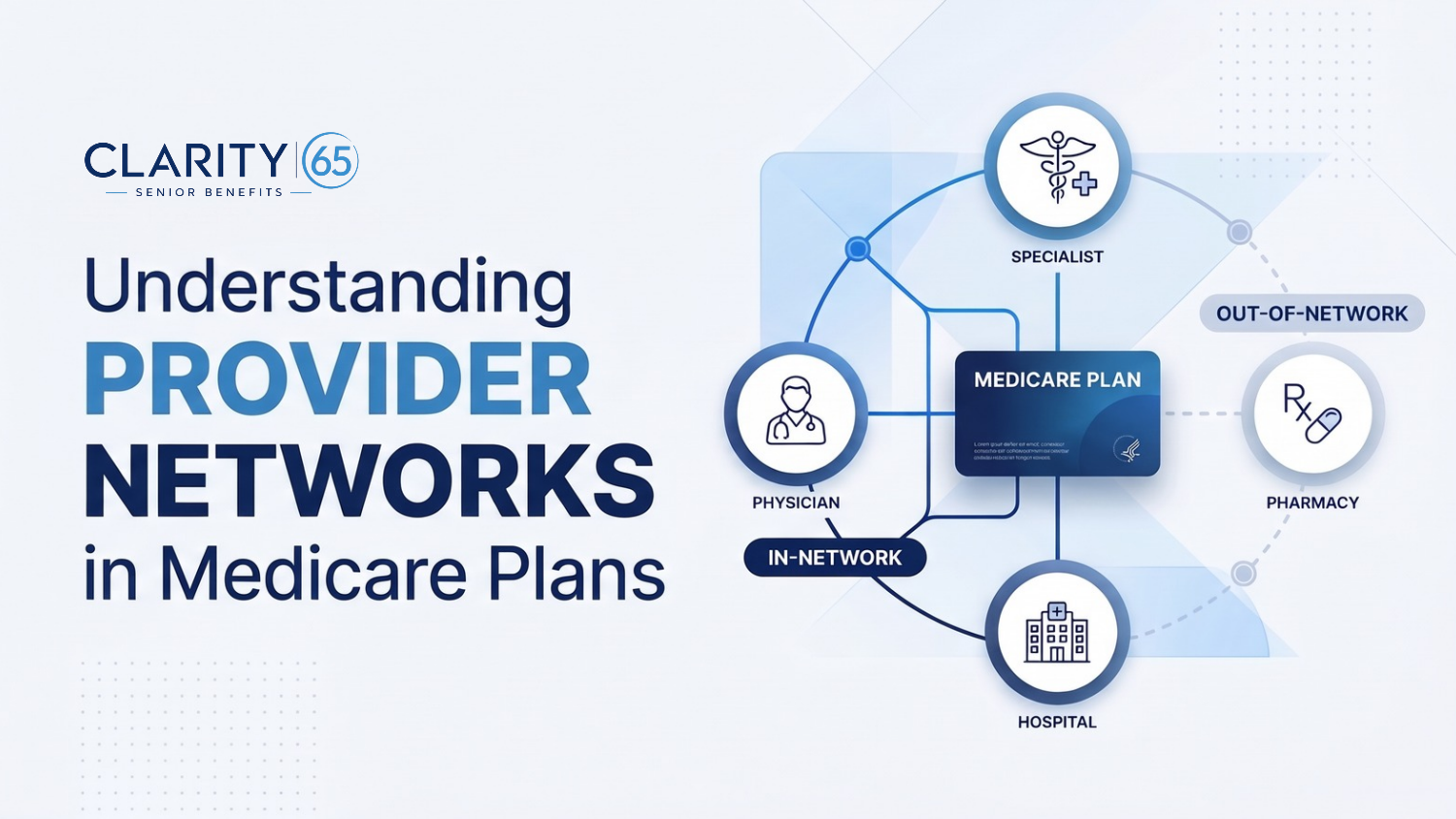
A provider network is a group of doctors, specialists, hospitals, and other healthcare providers that have agreements with a health insurance plan to provide covered services under specified terms.
Think of it like a directory of healthcare providers who participate in a particular plan.
When you enroll in a Medicare Advantage plan, the plan's network can play an important role in how you access routine medical care.
For example, you might have a primary care physician you've seen for years. You may also see a cardiologist, an orthopedic specialist, or another healthcare professional regularly.
Before enrolling in a Medicare Advantage plan, you'll want to know whether those providers participate in that specific plan.
An important distinction: A doctor accepting Medicare does not automatically mean that doctor participates in every Medicare Advantage plan.
A provider may participate in one plan offered by an insurance company but not another. Participation can also differ by location and plan year.
That's why checking the actual provider network matters.
Why Do Provider Networks Matter When Choosing a Medicare Plan?
Your healthcare coverage should work with the care you receive, not create unnecessary surprises.
Provider networks matter for several reasons:
Continuity of care
If you have an established relationship with a doctor, you may want to continue receiving care from that provider. Checking network participation before enrolling can help you understand whether that is possible under the plan you're considering.
Access to specialists
If you regularly see specialists, confirm that they participate in the plan. You should also understand whether the plan requires referrals or has other rules for specialist visits.
Access to hospitals and facilities
Your preferred doctor may participate in a plan while a particular hospital or facility does not. Check both when they matter to your care.
Out-of-pocket costs
Some plans charge different amounts depending on whether you use in-network or out-of-network providers. In certain circumstances, out-of-network care may not be covered at all, except where specific coverage rules apply.
Where you receive care
If you live in one community but regularly receive medical care in another, consider whether the plan's network includes providers in both locations. A network that works well for someone who receives all their care close to home may not offer the same convenience to someone who regularly travels between communities.
How Do HMO and PPO Medicare Advantage Plans Differ?
Two common types of Medicare Advantage plans are Health Maintenance Organizations (HMOs) and Preferred Provider Organizations (PPOs).
Both use provider networks, but they generally handle out-of-network care differently.
What Is an HMO Plan?
An HMO plan generally requires you to receive routine covered care from doctors, hospitals, and other providers within the plan's network.
There are exceptions, including emergency care, out-of-area urgent care, and temporary out-of-area dialysis. Some HMO plans also offer a point-of-service option that allows certain out-of-network services under specified conditions.
Many HMO plans require you to select a primary care physician. They also generally require referrals for specialist care, although exceptions apply.
An HMO may be worth considering if:
- Your preferred doctors and hospitals participate in the network.
- You generally receive care within your local community.
- You're comfortable following the plan's referral and network rules.
The important trade-off is that routine out-of-network care may not be covered. If you receive services outside the network without an applicable exception or coverage provision, you may have to pay the full cost.
Always review the specific plan's rules before making a decision.
What Is a PPO Plan?
A PPO plan also has a network of participating doctors, hospitals, and other healthcare providers.
The difference is that PPO plans generally allow you to receive covered services from providers outside the network, although you will usually pay more.
PPO plans generally don't require referrals to see specialists. However, other coverage requirements, including prior authorization for certain services, may still apply.
A PPO may be worth considering if:
- You want the option to receive covered care outside the plan's network.
- You receive care from providers in more than one area.
- You value having additional flexibility when choosing providers.
Keep in mind that out-of-network coverage doesn't mean every provider must accept your plan or agree to treat you. You should also check the plan's out-of-network cost-sharing and coverage rules before receiving care.
HMO vs. PPO: What's the Difference?
| Feature | HMO | PPO |
|---|---|---|
| Routine in-network care | Generally required for covered routine services | Available and generally costs less |
| Out-of-network care | Generally limited, with specific exceptions or plan options | Generally available for covered services at a higher cost |
| Primary care physician | Usually required | Generally not required |
| Specialist referrals | Usually required | Generally not required |
| What to verify | Network, referrals, and exceptions | Network, out-of-network costs, and coverage rules |
These are general characteristics, not guarantees about every plan. Specific rules vary, so review the plan's current documents before enrolling.
Does Original Medicare Have a Provider Network?
Original Medicare works differently from Medicare Advantage.
With Original Medicare, beneficiaries can generally receive care from any doctor or healthcare provider who accepts Medicare and is accepting new Medicare patients, subject to applicable Medicare coverage and other requirements.
Original Medicare does not use the same type of plan-specific provider network found in most Medicare Advantage HMO and PPO plans.
This distinction matters if you want flexibility in choosing healthcare providers.
However, there are other considerations when comparing Original Medicare with Medicare Advantage, including how you handle healthcare expenses and whether you have additional coverage.
How Does Medicare Supplement Insurance Work With Provider Networks?
Medicare Supplement Insurance, also called Medigap, helps pay certain out-of-pocket costs associated with Original Medicare, depending on the policy.
A Medigap policy does not create a separate provider network. Your ability to use a provider generally follows Original Medicare's rules.
This is different from enrolling in a Medicare Advantage plan, where the plan's provider network and coverage rules may influence where you receive routine care.
If you're comparing these approaches, look at the entire picture: provider access, coverage rules, potential out-of-pocket expenses, and your existing healthcare arrangements.
How Can You Check Whether Your Doctor Is in a Medicare Advantage Network?
Here's where a little preparation can make a meaningful difference. Before enrolling in a plan, take these steps:
1. Make a List of Your Current Providers
Start with the healthcare professionals and facilities you use most often. Include:
- Your primary care physician
- Specialists you see regularly
- Your preferred hospital
- Other clinics or healthcare facilities important to your care
If you have a caregiver who helps coordinate appointments, consider reviewing the list together.
2. Check the Plan's Current Provider Directory
Visit the insurance company's website and locate the provider directory for the specific plan you're considering. Search for each provider by name and, when available, location. Don't stop at the insurance company's name. Different plans offered by the same company can have different networks. Also, check the applicable plan year. A provider's participation in one year's network doesn't guarantee participation the following year.
3. Confirm With the Provider's Office
Once you've checked the directory, contact the doctor's office when appropriate. Ask whether the provider participates in the exact Medicare Advantage plan you're considering. If you receive care through a large medical group, ask about the specific physician and location rather than assuming that every provider within the organization participates. It's a useful extra step because provider directories can contain outdated or incomplete information.
4. Contact the Plan With Questions
If something isn't clear, contact the insurance plan directly. Ask about network participation, referral requirements, out-of-network coverage, and any rules that could affect your access to care. Keep a record of the information you receive, including when you checked and whom you contacted.
5. Repeat the Check When Your Coverage Changes
Provider networks can change during the year. A doctor who participates today may not necessarily remain in the network indefinitely. Plans must follow applicable requirements for access to covered care, including protections intended to prevent interruptions in medically necessary treatment. If you learn that your provider is leaving the network, contact the plan promptly to understand your options and any applicable transition protections. Don't wait until your next appointment to discover a change.
What If Your Doctor Is Out of Network?
Finding out that a preferred doctor is outside a plan's network doesn't automatically mean you have no options. What you can do depends on the plan type, the service you need, and the circumstances.
Here are a few practical steps:
- Review the plan rules: Determine whether the plan covers the service outside its network.
- Ask about costs: If out-of-network coverage is available, confirm the applicable cost-sharing and any other requirements.
- Explore other participating providers: If the plan doesn't cover routine care from your preferred doctor, look at the available in-network alternatives.
- Discuss ongoing treatment: If you're receiving medically necessary care, contact the plan to understand any applicable continuity-of-care protections.
- Consider your options before enrolling: If keeping your current doctor is a priority, compare plans based on verified provider participation rather than assumptions.
Emergency and urgent care have specific coverage rules, so don't assume routine out-of-network restrictions apply in the same way to those situations. The key is to understand the rules before you need care.
What Questions Should You Ask Before Choosing a Medicare Plan?
Before you enroll, ask yourself a few questions across key areas:
About your doctors
- Are my current doctors included in the plan's network?
- Are my specialists included?
- Are my preferred hospitals and facilities available?
About access to care
- Do I need a primary care physician?
- Do I need referrals to see specialists?
- What happens if I need a provider outside the network?
- What options are available if a provider leaves the network?
About costs and coverage
- What will I pay for in-network services?
- What will I pay for covered out-of-network services?
- Are there circumstances in which out-of-network care won't be covered?
- Are there other plan rules I should understand before receiving care?
About your lifestyle
- Do I receive care in more than one city or state?
- Do I travel frequently?
- Could my provider preferences change in the coming year?
These questions can help you compare plans based on how you actually use healthcare.
Should You Check Provider Networks Every Year?
Yes. It's a good habit, particularly if you're enrolled in Medicare Advantage.
Medicare Advantage plans can change their provider networks. Your doctors' participation can also change.
During Medicare's Annual Enrollment Period, which runs from October 15 through December 7, eligible beneficiaries can review their coverage and make certain changes for the following year.
If you're considering a different plan, verify your providers against the network for the upcoming plan year. If you're staying with your current plan, review any available notices and confirm participation when needed.
You don't necessarily need to change plans every year. The goal is to understand whether your current coverage continues to meet your needs and whether any changes deserve attention.
In Conclusion: Your Doctors Matter When Comparing Medicare Plans
Medicare provider networks may not be the first thing you think about when comparing coverage, but they deserve a place near the top of your checklist.
Understanding the difference between HMO and PPO plans, checking your doctors and hospitals, and reviewing the rules for out-of-network care can help you make a more informed decision.
Remember, a familiar insurance company name doesn't guarantee that every doctor participates in every plan. Always verify the specific provider, plan, and plan year.
And if you need help understanding your options, take your time and ask questions.
Need Help Reviewing Your Medicare Options?
At Clarity65, we believe Medicare decisions should start with understanding.
Our goal is to help you explore available Medicare options, understand important differences between plans, and consider factors such as your doctors, healthcare preferences, and coverage needs.
You can begin by exploring our Medicare Advantage information or visiting Clarity65 to learn more.
The more you understand before enrolling, the better prepared you'll be to make a decision about your Medicare coverage.
Frequently Asked Questions
Do all doctors accept Medicare Advantage plans?
No. A doctor accepting Medicare does not automatically mean that doctor participates in every Medicare Advantage plan. A provider may participate in one plan offered by an insurance company but not another, and participation can vary by location and plan year.
What is the main difference between an HMO and a PPO Medicare Advantage plan?
An HMO generally requires you to receive routine care from doctors and hospitals within the plan network and often requires specialist referrals. A PPO generally allows you to see out-of-network providers at a higher cost-share and typically does not require referrals.
Does Original Medicare have a provider network?
No. Original Medicare does not use plan-specific provider networks. Beneficiaries can generally see any healthcare provider nationwide who accepts Medicare and is taking new Medicare patients.
Does Medicare Supplement Insurance (Medigap) have a doctor network?
No. Medigap policies do not create a separate provider network. Your ability to see a provider follows Original Medicare rules, allowing access to any Medicare-participating doctor nationwide.
Can Medicare Advantage provider networks change during the year?
Yes. Provider contracts can change during the year. Beneficiaries should verify provider participation annually during the Medicare Annual Enrollment Period (October 15 through December 7).
Sources for further reading
This article is for general educational purposes and does not guarantee provider participation or coverage under any particular plan. Provider networks, costs, and coverage rules vary by plan and location. Verify current information with the plan and provider before making a coverage decision.
Raul Gonzalez
Licensed AgentIndependent licensed Medicare advisor dedicated to plain-English guidance and personalized plan comparisons across leading national carriers.
Clarity65 is not connected with or endorsed by the U.S. government or the federal Medicare program.